
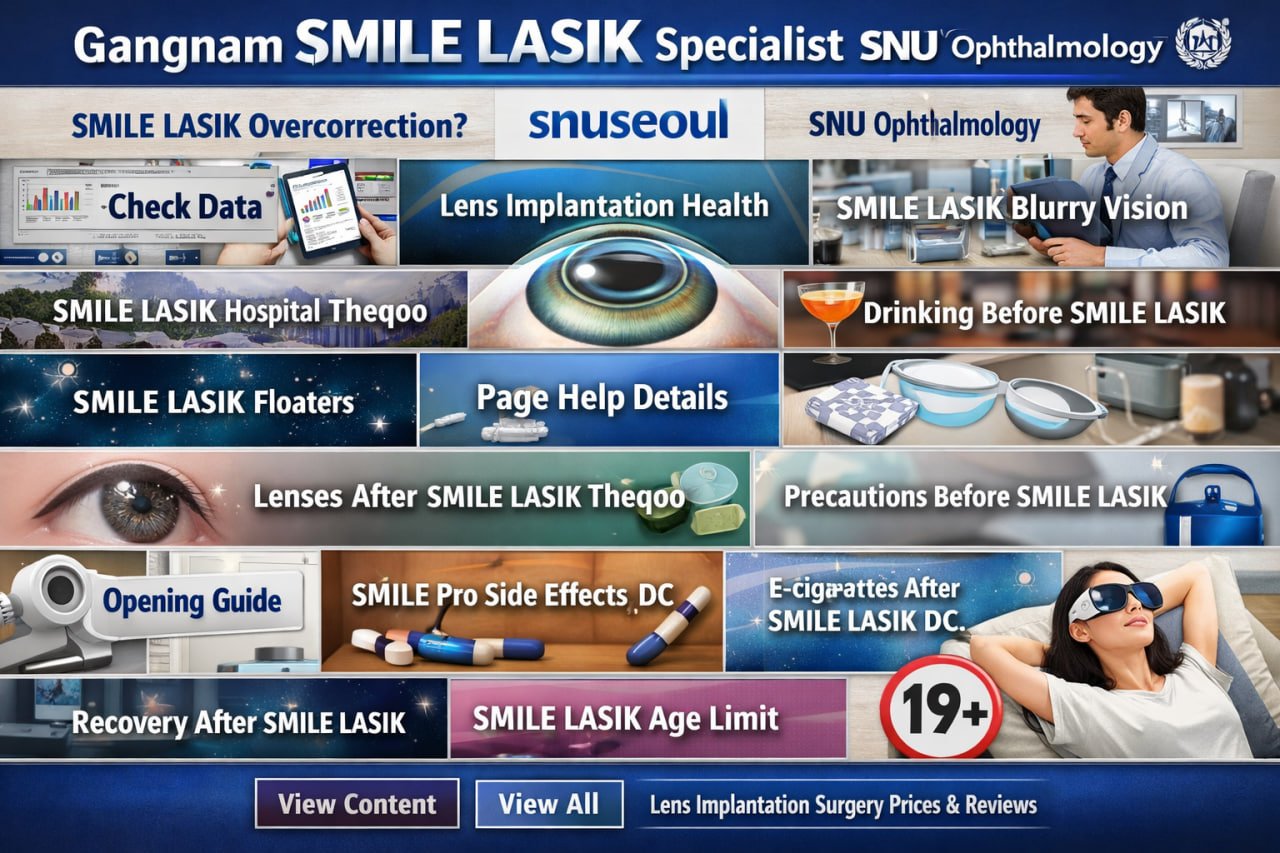
Understanding SMILE LASIK and Its Rising Popularity
SMILE LASIK has emerged as a revolutionary vision correction procedure that has gained immense popularity in recent years. Unlike traditional LASIK, SMILE (Small Incision Lenticule Extraction) involves creating a small, precise incision to remove a lens-shaped piece of corneal tissue, correcting refractive errors with minimal disruption to corneal stability. Patients at SNU Ophthalmology and affiliated centers such as snuseoul.com are increasingly seeking SMILE LASIK for its safety, effectiveness, and quick recovery period.
However, as with any surgical procedure, understanding the precautions before SMILE LASIK is critical. Specialists emphasize that patient preparation, lifestyle adjustments, and awareness of potential risks can dramatically influence post-operative outcomes.
Preoperative Assessments and Age Considerations
Before undergoing SMILE LASIK, comprehensive eye evaluations are mandatory. Ophthalmologists at SNU안과 stress that not all candidates are suitable for SMILE. Factors such as corneal thickness, refractive stability, ocular surface health, and the presence of pre-existing conditions must be thoroughly assessed. Patients are advised to undergo tests including corneal topography, pachymetry, and detailed refraction assessments.
Age plays a crucial role in determining candidacy. SMILE LASIK has an age threshold, as highlighted by SNU Ophthalmology doctors. Typically, candidates must be at least 20 years old with a stable prescription for at least one to two years. Younger patients may face risks of prescription regression, while older patients should consider age-related conditions like presbyopia or early cataracts. This age consideration ensures that the surgical outcome remains stable and long-lasting.
Lifestyle Precautions Before SMILE LASIK
SNU Ophthalmology specialists highlight several lifestyle precautions to enhance surgical safety. Avoiding alcohol and smoking for at least one week before surgery is critical. Alcohol consumption, in particular, can affect tear film quality and ocular healing. Patients are also advised to discontinue contact lens use for a specific period before preoperative assessments, as lenses can alter corneal shape and compromise measurements.
Moreover, attention to general health is necessary. Patients with uncontrolled diabetes, autoimmune conditions, or severe dry eyes may require additional evaluation before being cleared for SMILE LASIK. Maintaining adequate hydration, getting sufficient rest, and managing systemic conditions ensure smoother surgical outcomes.
Common Preoperative Questions: SMILE LASIK Safety and Side Effects
Many patients researching SMILE LASIK on forums such as 스마일라식 병원 더쿠 or snuseoul.com frequently ask about side effects like 스마일라식 뿌연 증상 (blurred vision). While temporary visual fluctuations are normal immediately after surgery, most patients notice gradual improvement within a few days. Specialists also warn that dry eye symptoms, mild discomfort, or glare can occur, emphasizing that careful preoperative evaluation and adherence to post-surgery instructions minimize risks.
Patients often seek guidance regarding unusual symptoms or complications. Questions about 스마일라식 비문증 (floaters) and their relation to SMILE LASIK are common. Experts clarify that floaters are usually unrelated to the procedure and more associated with vitreous changes or natural aging, but any sudden increase in floaters or flashes should prompt immediate consultation.
Pre-Surgery Instructions and Medication Guidelines
SNU Ophthalmology provides detailed instructions to optimize surgical safety. Patients are typically advised to avoid using eye makeup, creams, or lotions on the day of surgery. Certain medications, particularly blood thinners, may require temporary discontinuation under a physician’s guidance. Patients are also instructed to use prescribed lubricating eye drops leading up to surgery to improve ocular surface health.
In addition, the timing of SMILE LASIK should be planned to allow adequate recovery and avoid situations that may compromise healing. Patients are encouraged to arrange transportation and refrain from strenuous activities immediately following the procedure.
The Role of Professional Guidance and Consultation
Professional consultation is critical in clarifying doubts about SMILE LASIK, including age limitations and necessary precautions. SNU안과 and platforms like snuseoul.com offer detailed explanations, patient reviews, and guidance on the recovery process. Patients are encouraged to discuss expectations, lifestyle habits, and personal medical history to ensure the procedure aligns with their visual goals.
Experts emphasize that SMILE LASIK is a precise procedure that demands careful consideration. Understanding both the benefits and the limitations, including potential age restrictions and necessary preoperative measures, empowers patients to make informed decisions.
Conclusion: Safe and Informed SMILE LASIK Experience
By following the preoperative precautions and respecting age guidelines, patients can experience the transformative benefits of SMILE LASIK with minimal risk. Comprehensive assessments, lifestyle adjustments, and professional guidance from SNU Ophthalmology specialists ensure optimal outcomes. For those exploring SMILE LASIK, consulting trusted sources like snuseoul.com provides valuable information, helping patients prepare safely and confidently for their vision correction journey.